The tide chart came from the newsagent on the corner, the one that still sells fishing line and rubber thongs in three sizes. Two dollars. A single sheet of A3, folded twice, printed in two colours on paper thin enough to read the back through the front. It has been on the fridge since January, under a magnet shaped like a prawn, and the corners have curled the way paper does in a kitchen.
Before this year I could not have told you when high tide was. I could have told you that it happened. I knew the sea went up and came down and that this had something to do with the moon, in the way I know that bread has something to do with yeast.
Now I check it before I check the weather.
What is actually on it
The chart is a grid and nothing else. Down the left, the days of the month. Across the top, four columns: two high tides and two lows, each with a time and a height in metres. At the bottom there is one line of small print about the datum, and a note that predictions are given for the standard port and should be adjusted for secondary ports, which nobody does.
It took me a fortnight to notice the thing that should have been obvious from the first look. These are not measurements. They are predictions, and the chart for next March already exists. It existed last March. You could print the tide tables for the year 2140 tomorrow afternoon and they would be right, because the thing being predicted is the position of two large rocks in space, and we have had a firm grip on where those are going for about three hundred years.
Weather is a forecast. Tide is arithmetic.
That distinction has turned out to matter more to me than it has any right to. A weather app is a negotiation. It offers you a percentage and leaves you to decide how brave you feel. The tide chart makes no offer. At 6.14 on Sunday morning the water will be three tenths of a metre above the datum, and your opinion about that is not required.
The point
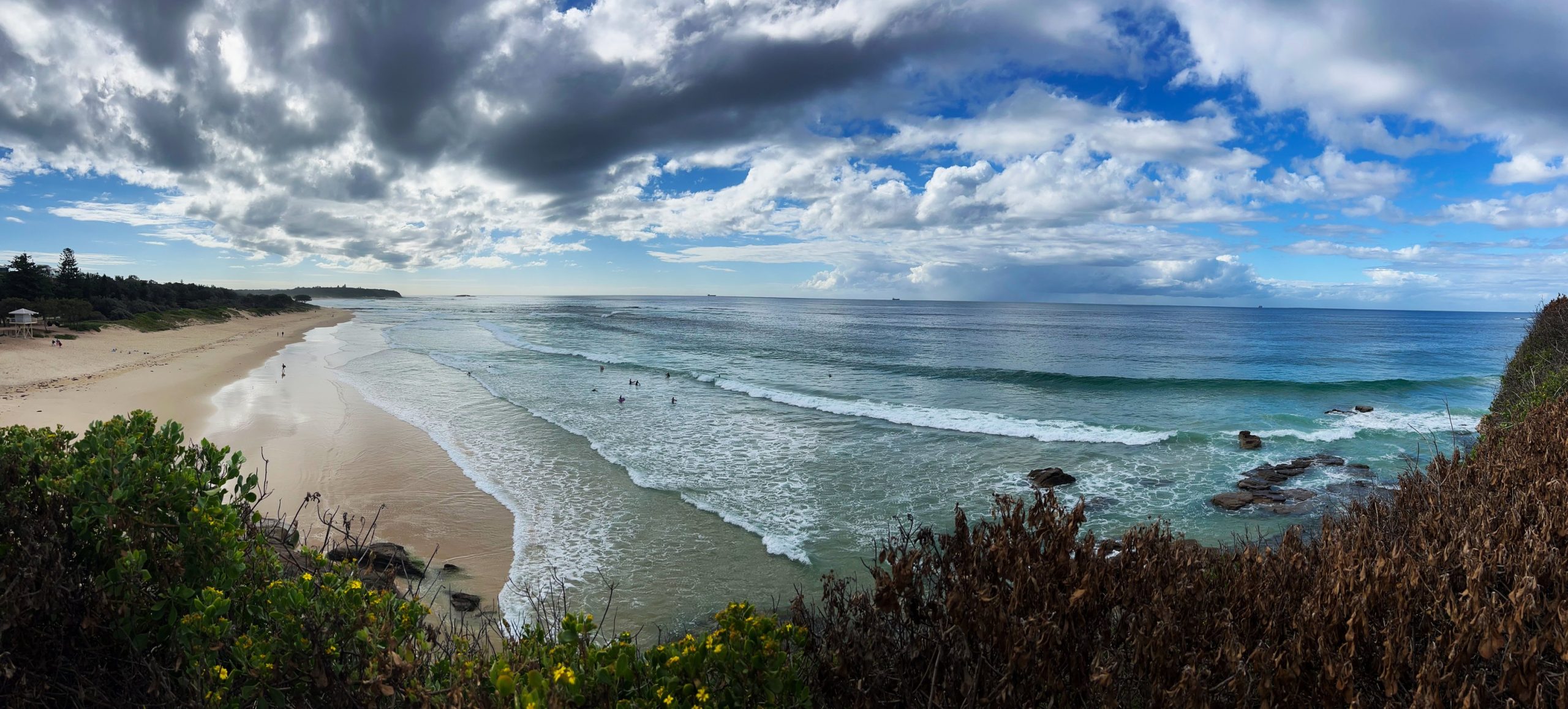
There is a point at the south end of the beach you can walk around at anything under about 0.4 metres. Above that you get wet to the knee. Above 0.8 you do not go at all, or you go and then stand on a rock for forty minutes feeling foolish while it comes in behind you. None of this is signposted. I learned it by getting it wrong twice, which is the only way anybody learns anything about a stretch of coast.
So the chart stopped being information and became a permission slip. Sunday, 6.14am, 0.3 metres. That is a morning when the point is open. Wednesday, 11.02, 1.6. That is a morning to stay on the sand.
I started planning around it without deciding to. The walk moved to whichever morning the low fell in a civilised place. Then the coffee moved. Then, one week in May, I rescheduled a call.
A clock that does not match
The part I keep turning over is the drift.
A tidal day runs about twenty four hours and fifty minutes, because the moon does not hold still while the earth turns underneath it. So the tide arrives roughly twenty five minutes later each time, and a low tide walks forward through the week. A Sunday dawn low becomes a Monday breakfast low, then Tuesday mid-morning, and by Friday the good water is at two in the afternoon when I am indoors looking at a screen. Three weeks later it comes back around to the morning like a bus you have stopped expecting.
The coast keeps a calendar of its own, and it only occasionally lines up with mine. That misalignment is the whole education.
If the tide ran on our clock it would be a scheduling problem, and I would have solved it in a week and stopped thinking about it. Because it does not, it stays slightly out of reach, and the only way to live alongside it is to keep checking.
I have come to think of it as the actual local time. The clock on the kitchen wall tells me what time it is for the purposes of getting to places. The sheet of paper next to it tells me what time it is here.
What it has changed
Not much, and that may be the point.
I get up earlier some weeks and later in others, and the pattern of that has nothing to do with how I feel or what I intend. I have stopped thinking of six in the morning as virtuous and two in the afternoon as slack, because some weeks the water decides. I know the difference between a spring tide and a neap one now, which is a fortnightly rhythm underneath the daily one, and knowing it means the month has a shape it did not have before.
And I have got better at a small, specific kind of patience. If the point is shut this morning it will be open in three days. There is no version of the situation where arguing helps.
The chart for next year turns up at the newsagent some time in November. I intend to be there for it. I will put it on the fridge under the prawn, and the old one will go in the drawer with the other things I cannot throw out, and for a week I will get the dates slightly wrong because the new one starts on a different day of the week.
Two dollars. It is the best value thing in the house.
Leave a Reply