The wind came round to the east in the last week of June and stayed there until the second week of August. Not a storm. Nothing anybody would report. Just a steady fifteen to twenty knots off the water, day after day, for six weeks.
You do not notice the first fortnight. The sand looks the way sand looks. Then one morning the step at the top of the beach is knee high instead of ankle high, and you realise you have been walking up it without thinking for a week.
By the end of July the step was at my hip. The dune had a clean vertical face cut into it, the colour of wet cardboard, with the roots of the spinifex hanging out of it like wiring pulled from a wall. Two of the access stairs ended in open air, a foot short of the sand. Somebody had put a witches hat at the top of one of them, which is the most Australian possible response to a piece of public infrastructure becoming a diving board.
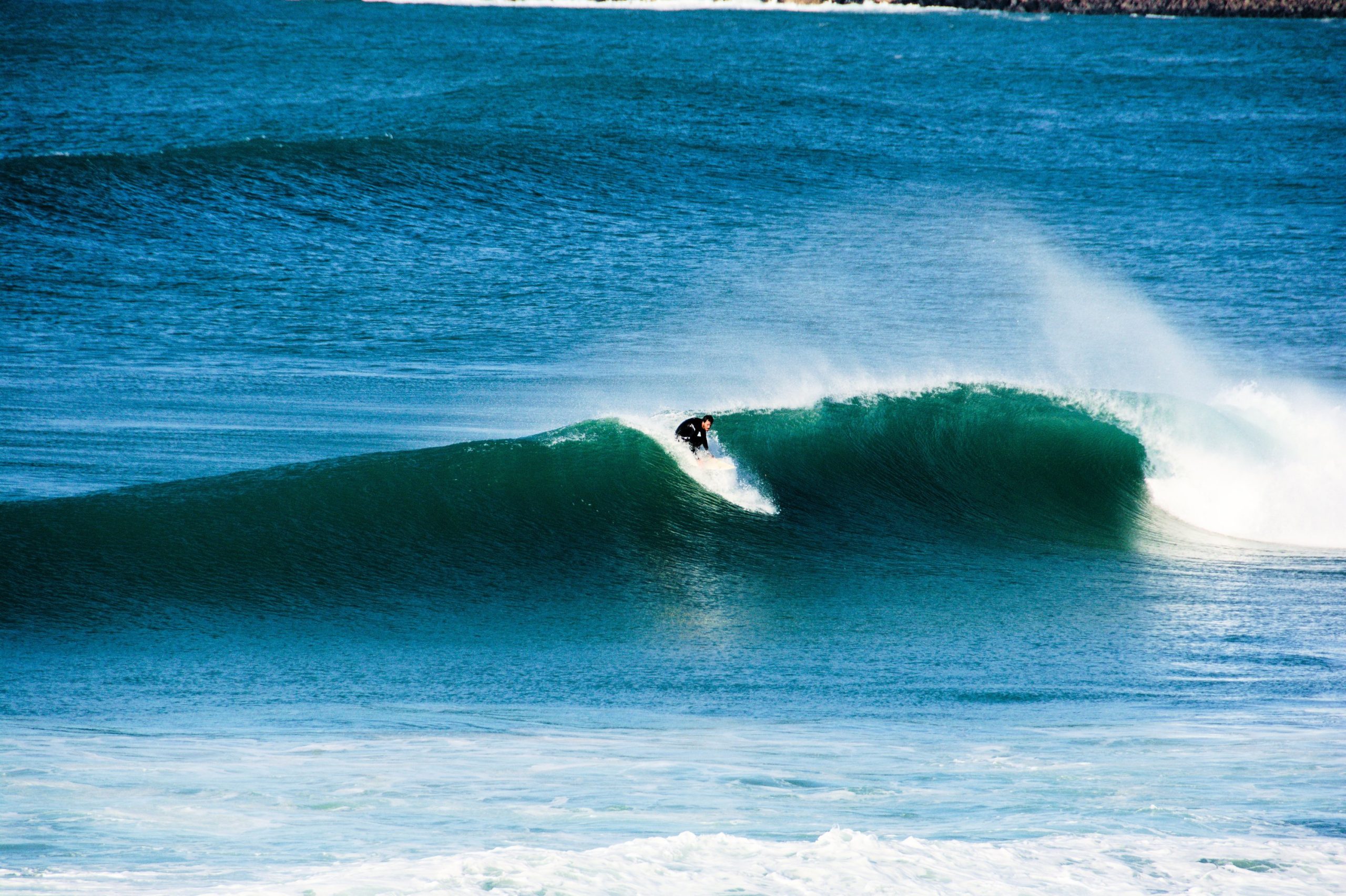
The sand did not disappear. That was the part I had wrong. It moved offshore and sat in a bar about forty metres out, which you could see at low water as a line of paler green, and which is why the waves through most of July broke further out and softer than usual. The beach had not lost anything. It had rearranged itself into a shape that suits an easterly, the way you shift in a chair you have been sitting in too long.

Then on the ninth of August the wind went south west for four days, and the whole thing began to come back. Not all at once. The step at the top is still there, lower now, and the stairs still end early, and there is a scatter of older rock exposed at the north end that I had never seen before and probably will not see again for years.
What stayed with me is the timescale. Six weeks of a wind so unremarkable that nobody mentioned it, and the result was a change to the shape of the land that will take most of a season to undo. Nothing dramatic happened. It was just persistent, in one direction, for longer than anything usually is.