
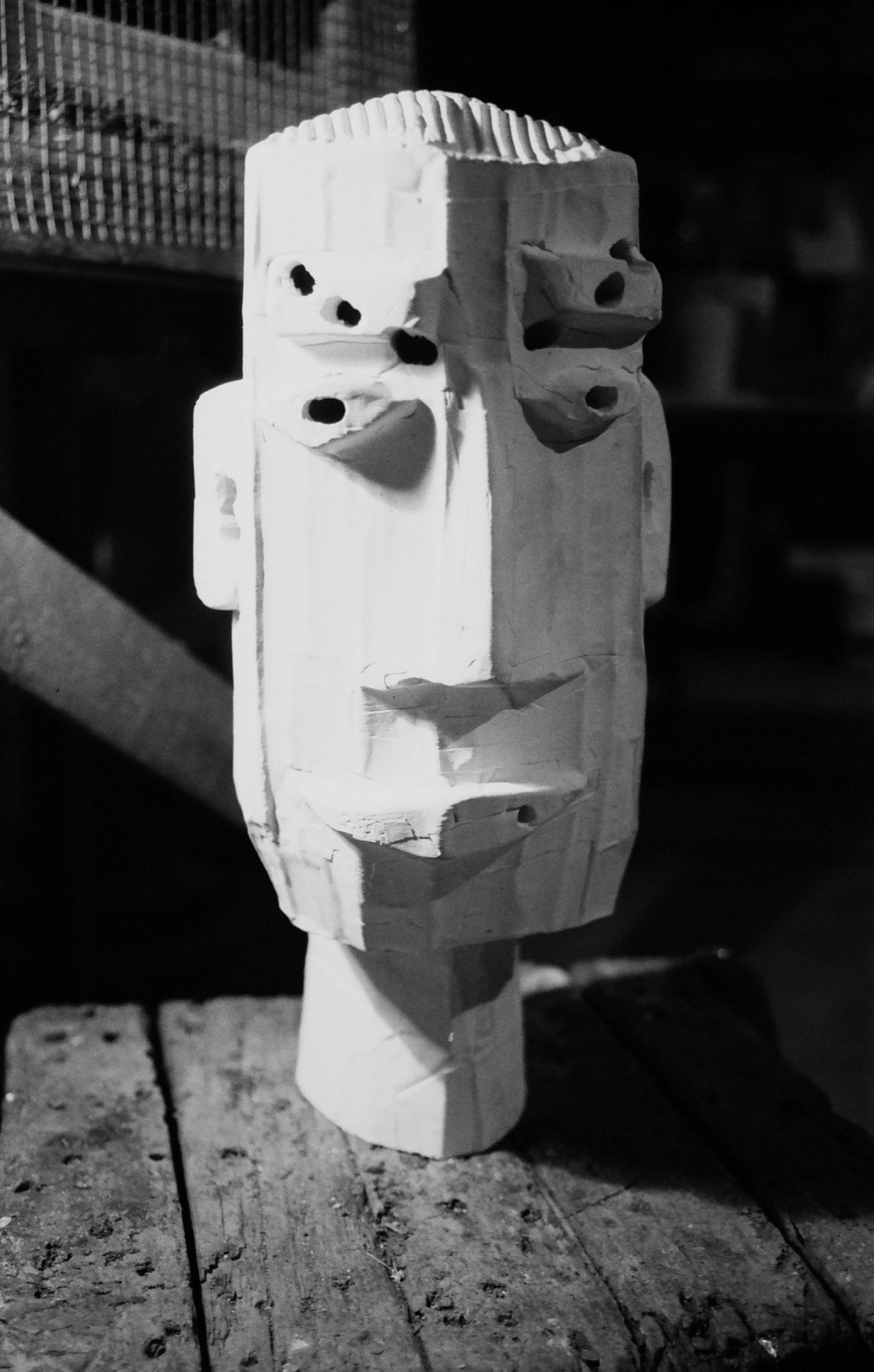
Two of these are wood and came from a stall at a market for eleven dollars each. The third is granite, it is about two and a half thousand years old, and I photographed it in a temple courtyard in 2018 with a phone.
They have been in the same folder on my computer ever since and I have never been able to explain why until recently.
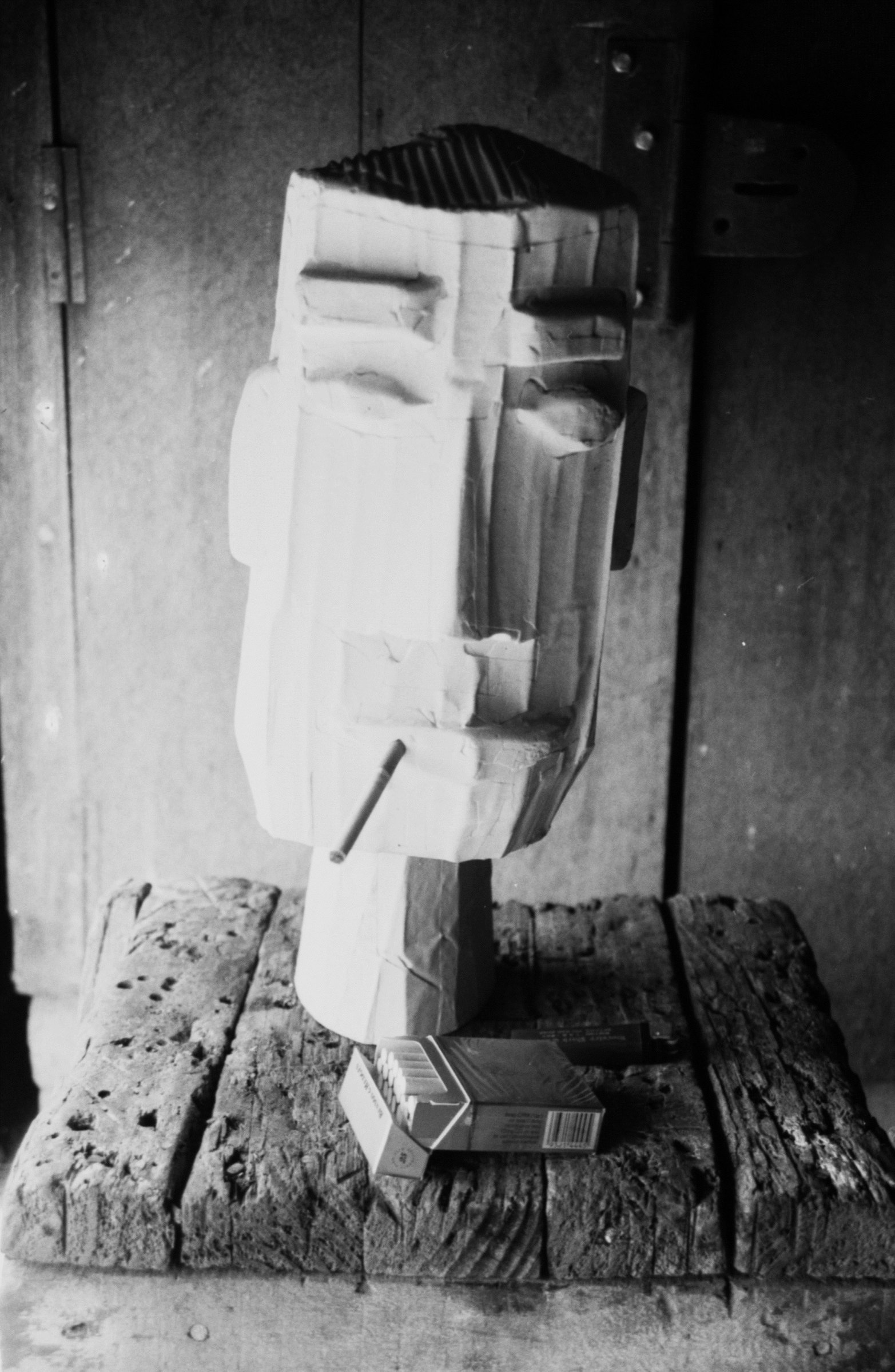
The wooden ones are crude. That is not a criticism. The maker has used maybe nine cuts for the whole face: two for each eye socket, one for the nose, a horizontal for the mouth, and a few to bring the jaw in. There is no modelling. No surface anywhere is curved except where the grain made it so. And yet you read it instantly as a face, and more than that, you read it as a face with an expression, and if you show it to two people they will broadly agree on what the expression is.
The second one is the same hand and a slightly different decision. The mouth is a wedge rather than a line, and the whole thing reads as older and less friendly, and the only difference is about two millimetres of cut.
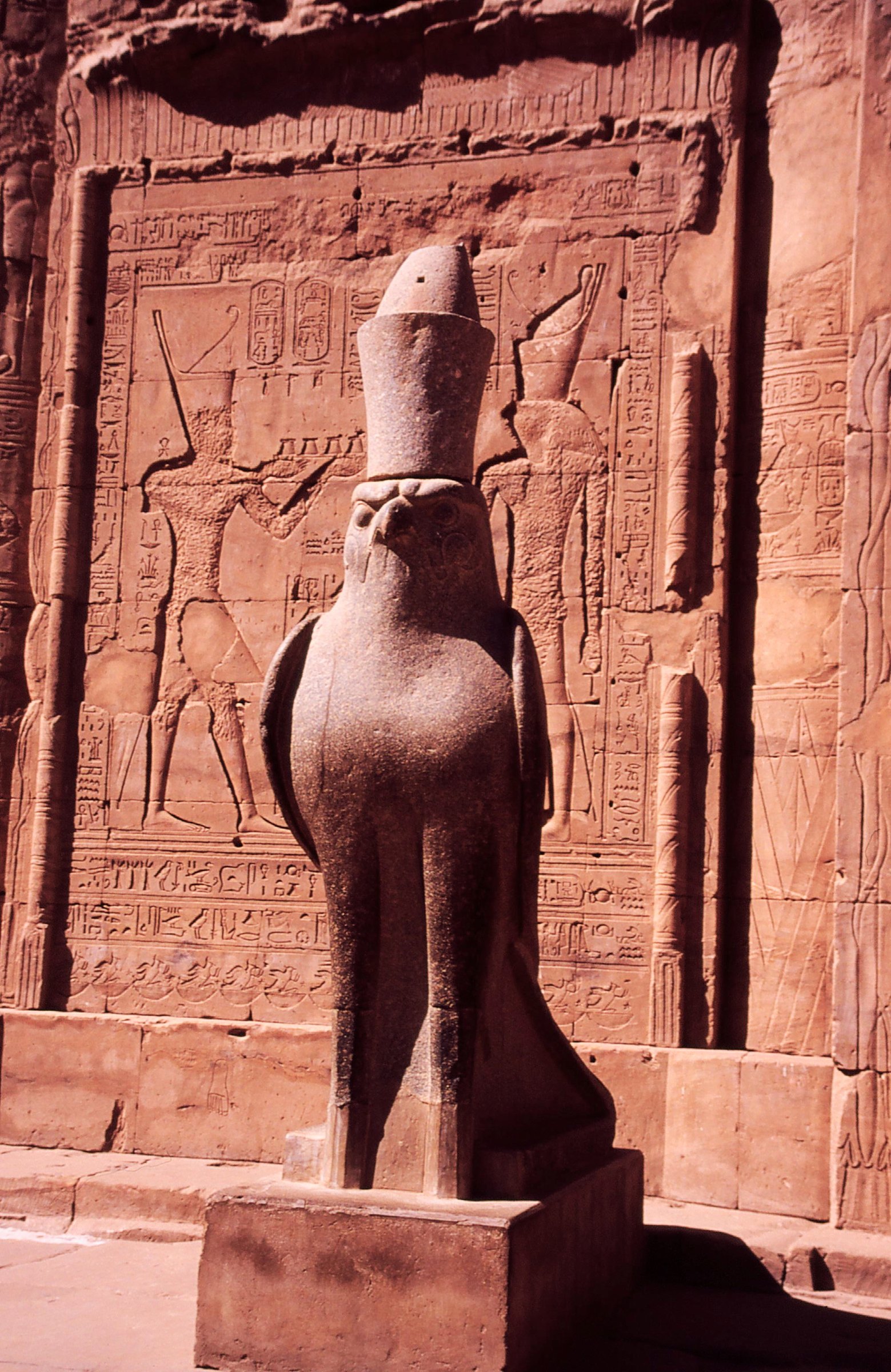
The falcon is not a head. I know. It has been in the folder with them for seven years anyway, because it is doing the same thing with vastly more skill: taking a living form and reducing it to the smallest number of surfaces that still carry it. Nothing on that bird is observational. The chest is a curve that no falcon has. The eye is a groove. And it is more convincingly a falcon than a photograph of one, because the carver has thrown away everything that was not the idea of a falcon and kept only that.
The wooden heads are doing the same operation with nine cuts and no training, and they get about sixty per cent of the way there, which for eleven dollars is remarkable.
What I have ended up thinking is that the interesting number is not how much skill went in. It is how little you can remove a thing down to before it stops arriving. A face survives being reduced to nine straight cuts. Two millimetres past that and it is a block of wood.
Nobody knows where the edge is until they cross it, which is why you have to keep cutting.